
A gold necklace under the wrong light looks brassy. The same necklace under the right light, held against the customer’s skin in a well lit mirror, sells itself. In jewellery retail, the interior is not the backdrop to the product. It is part of how the product looks.
Jewellery showroom interior design has to balance three things that pull against each other: showing pieces well, making customers comfortable enough to spend time and money, and keeping very valuable stock safe. This guide covers lighting, counters, zoning and security, with a section on the conflict between security and fire safety that many showroom designs get wrong.
The short answer
Jewellery showroom interior design is mostly about light, trust and security. The light has to show the true colour of the metal and the fire of the stones, so use LEDs with a colour rendering index (CRI) of 90 or more, warmer light around 3000K over yellow gold and cooler light near 4500K over diamonds and white gold. Keep general room light softer than the counters so the eye goes to the pieces. The floor plan matters too, as our retail showroom layout guide shows. Counters should be at a height where a customer can sit comfortably, with the display at eye level when seated. Plan security from the first drawing: strong room, CCTV coverage of every counter, and a controlled entry. Hyderabad shoppers often come as a family, so allow seating and space for three or four people at each counter rather than one stool, and a private room for bridal purchases.
What matters most in a jewellery showroom?
Lighting comes first, because it decides how the jewellery looks. Then the counters, where the actual sale happens, followed by zoning the floor by type of jewellery and customer. Security runs through all of it. Finishes and colours come last, and should stay quiet so they do not compete with the pieces.
A common mistake is to start with an impressive ceiling, a dramatic facade or expensive stone everywhere. These photograph well and cost a lot, but customers come to see the jewellery. Busy finishes, strong colours and shiny surfaces all reflect light and colour onto the pieces and distract the eye. The most effective jewellery interiors are quite calm, with the drama saved for the pieces.
Counter design for jewellery
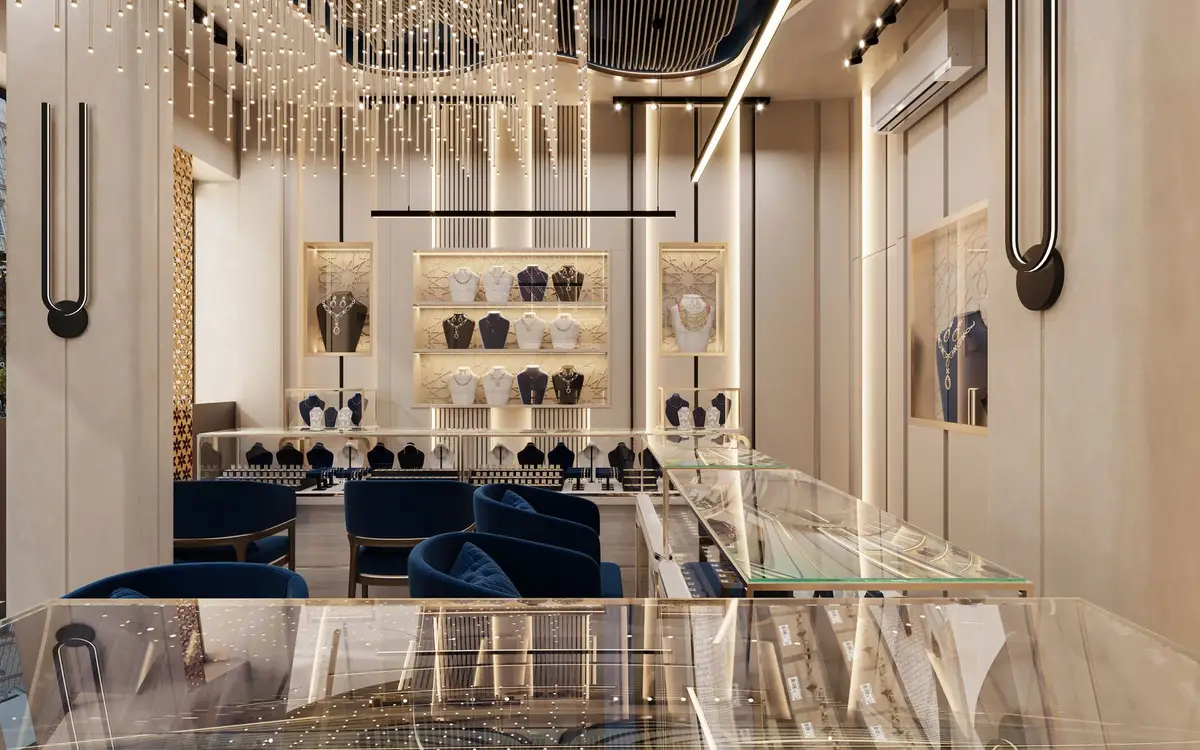
Most serious jewellery sales happen sitting down. A seated counter at about table height, around 750 mm, with comfortable chairs for the customer and their family, invites a long conversation. Standing counters at around 900 to 1000 mm suit quick sales, such as silver, gifting or repairs.
The counter must be deep enough that customers cannot reach into the display or the staff side. Display cases inside counters should open only from the staff side, with good locks. Use toughened or laminated glass for counter tops and display cases. Laminated glass holds together if broken, which matters for security.
Indian jewellery shopping is often a family event. A bride may come with parents, siblings and in-laws. Counters for bridal sales need room for four to six people to sit or stand comfortably, and space for trays to be laid out side by side. A cramped bridal counter makes a big purchase feel rushed.
Security that does not block the exits
Jewellery showrooms need layers of security: controlled entry, often with a security guard and sometimes a two-door entry lobby; cameras that cover every counter, the entrance and the cash area; panic alarms at counters; and a strong room or safes where stock is locked away at night.
Here is the problem that is easy to miss. Every one of those measures tries to stop people moving freely, and fire safety requires the opposite. In an emergency, everyone inside must be able to get out quickly without keys, codes or a guard. A two-door entry lobby that traps people, a locked rear door, or a strong room door that cannot be opened from inside are all serious risks.
The answer is to design security and fire safety together from the start. Locks on escape doors should release automatically when the fire alarm sounds. Exit routes should be sized for the number of people in the showroom at a busy time, including families. The fire consultant should review the security design, and the security designer should see the fire plan. Our guide to fire NOC for commercial interiors in Hyderabad explains the approval side.
Talk to your insurer before design starts. Insurers commonly set requirements for safes, alarm systems, glass and camera coverage, and a design that ignores them may need costly changes before cover is given.
Jewellery showrooms in Hyderabad
Many jewellery showrooms in Hyderabad sit on busy main roads with glass fronts facing the street. Afternoon sun on that glass adds heat and glare at exactly the time families come in, so shading, glass choice and air conditioning need planning together. Wedding season brings large family groups, which means counters, seating and walkways should be sized for the busiest weekends, not an average weekday.
Fire approval and security planning both apply to showrooms of this kind. We explain the approval side in our guide to fire NOC for commercial interiors in Hyderabad.
Lighting numbers for a jewellery showroom
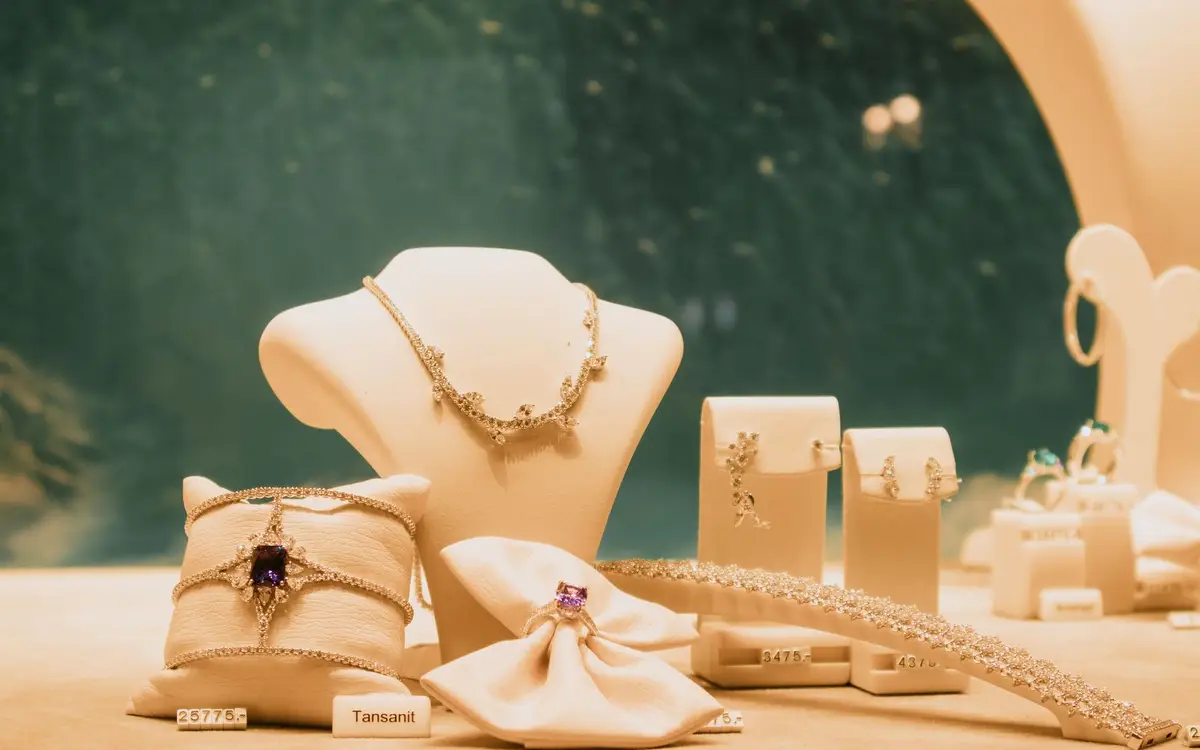
Lighting guides for jewellery stores set the floor at CRI 90 or above, with about 3000K bringing out yellow gold and around 4500K bringing out diamonds (source: PacLights, jewellery store lighting). Wipro Lighting also warns that light that is too warm makes it harder to judge colour and quality.
In practice that means three layers, the same idea we cover in showroom lighting design. Soft ambient light in the room. Bright, tight beams in the counters and wall cases. And mirrors lit from the front, so a customer trying a necklace sees her face lit evenly, not shadowed from above.
For a small jewellery showroom, put most of the budget into the counters and their light. A plain room with well-lit counters sells better than a busy room with flat light.
When we are not the right fit
We design and build commercial showrooms in Hyderabad, including lighting, joinery, counters and services, with design and execution under one contract. We coordinate with your security and insurance providers, but we are not a security systems company, and safes and strong room doors must come from specialist suppliers who can show test reports.
If you are planning a new jewellery showroom or reworking an existing one, tell us about your stock and your customers and we will start with the lighting and the counters.
What is the height of a jewellery counter?
Seated counters are usually about 750 mm high, at table height, for longer and higher value sales. Standing counters are usually about 900 to 1000 mm for quicker sales.
How do you design a bridal jewellery section?
Give it privacy and space: a separate lounge or screened area with seating for a whole family, room to lay trays side by side, flattering light at mirrors, and a calmer pace than the main floor.
Sources we checked
- PacLights, The Critical Role of Lighting in Jewelry Stores
- Wipro Lighting, 3 lighting considerations for jewellery stores
Codes change. Confirm the current edition with your architect or the authority before you build.